
Mulberry - Morus
Morus, a genus of flowering plants in the family Moraceae, comprises 10–16 species of deciduous trees commonly known as mulberries, growing wild and under cultivation in many temperate world regions.[1] The closely related genus Broussonetia is also commonly known as mulberry, notably the paper mulberry, Broussonetia papyrifera. Mulberries are fast-growing when young, but soon become slow-growing and rarely exceed 10–15 metres (30–50 ft) tall. The leaves are alternately arranged, simple and often lobed and serrated on the margin. Lobes are more common on juvenile shoots than on mature trees. The trees can be monoecious or dioecious.[2][3] The mulberry fruit is a multiple fruit, approximately 2–3 cm (3/4–1 1/4 in) long. Immature fruits are white, green, or pale yellow. In most species the fruits turn pink and then red while ripening, then dark purple or black, and have a sweet flavor when fully ripe.
Locations
| Location | Comments |
|---|---|
| Amherst nursery, main parking lot | check with Hort Dept |
| x | None |
Toxicity
| Animal | Part | Comments | Citation |
|---|---|---|---|
| sheep; humans | Reference: 1, 2 |
images
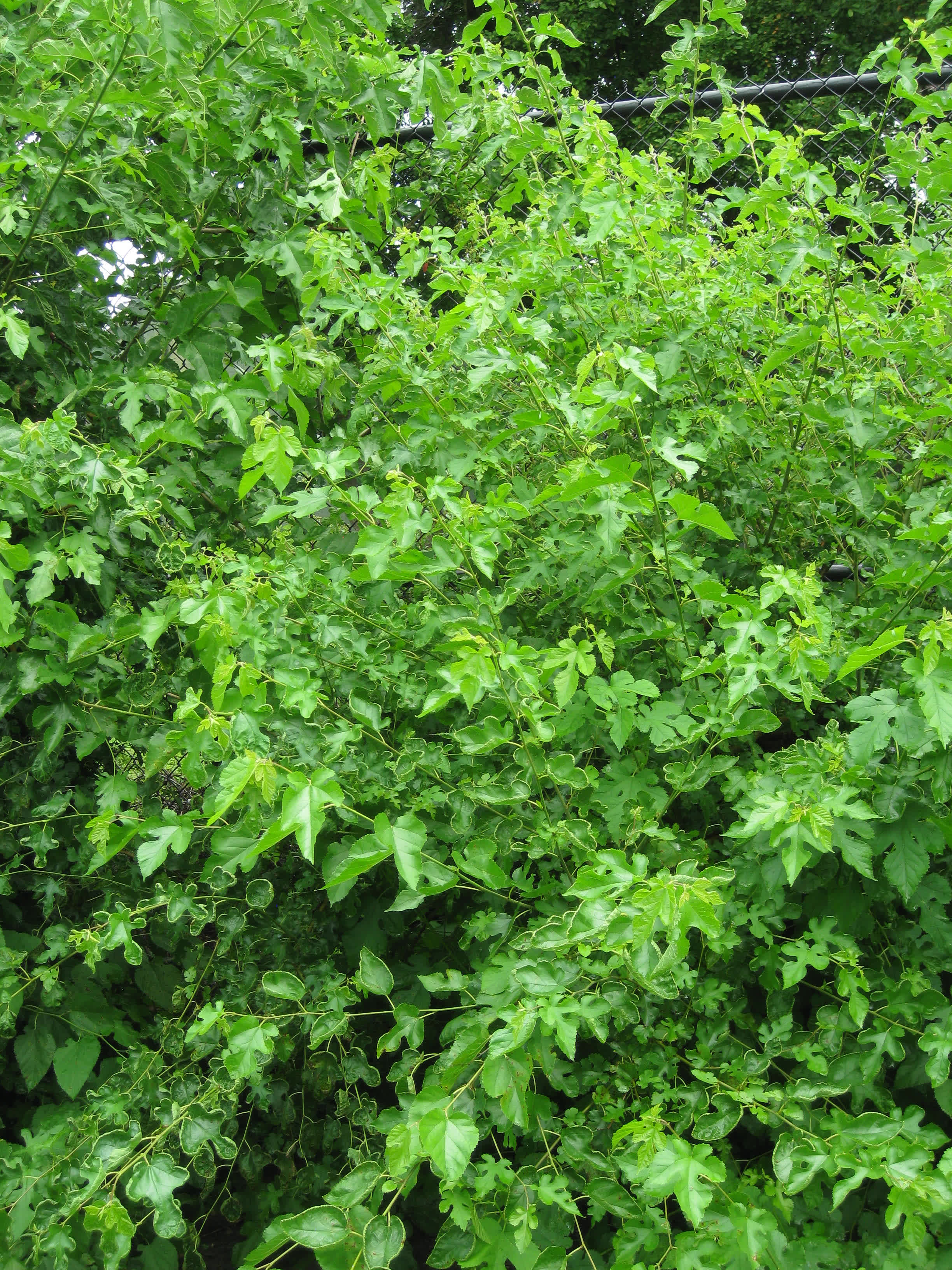
Plant
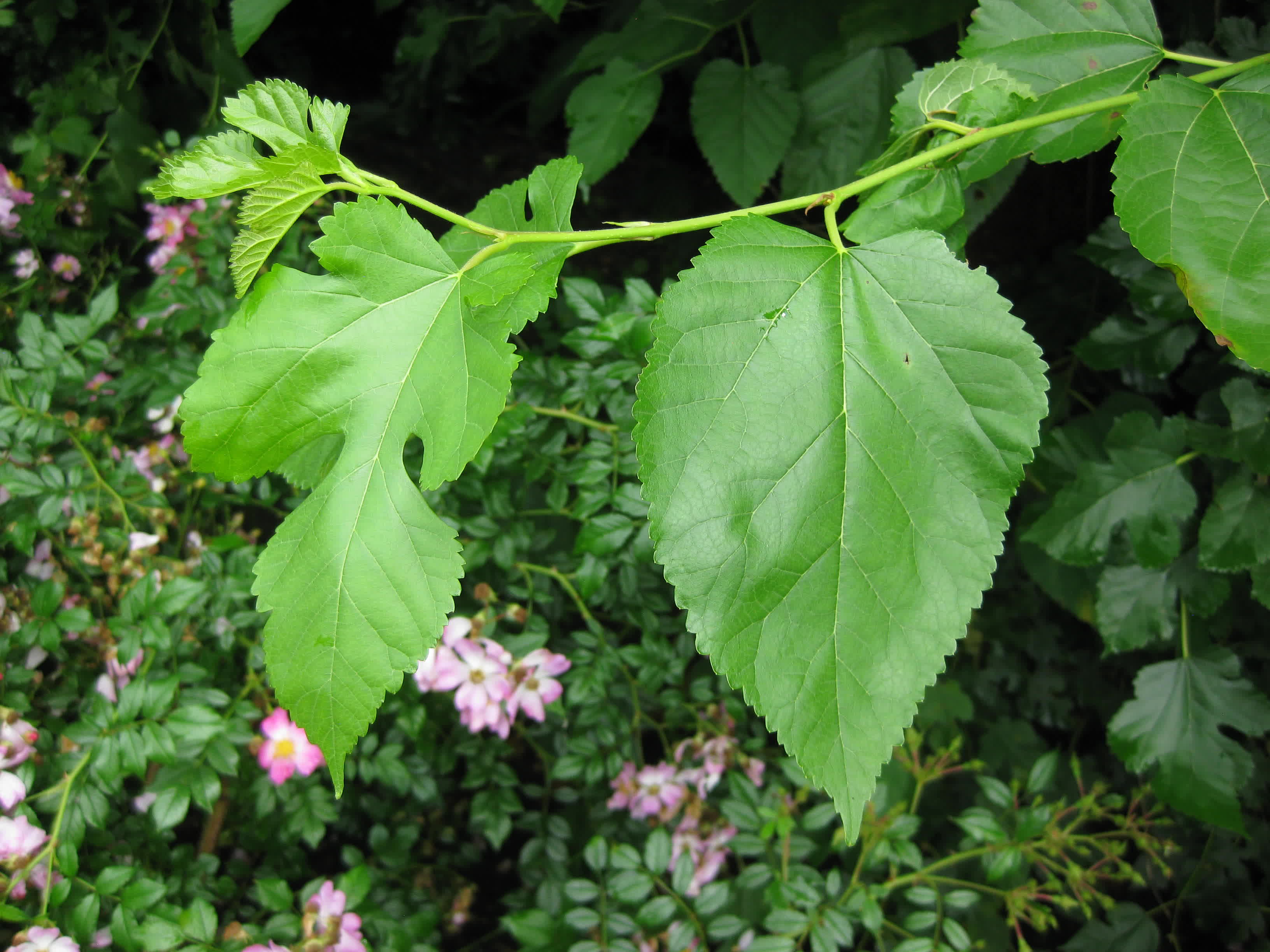
Leaves
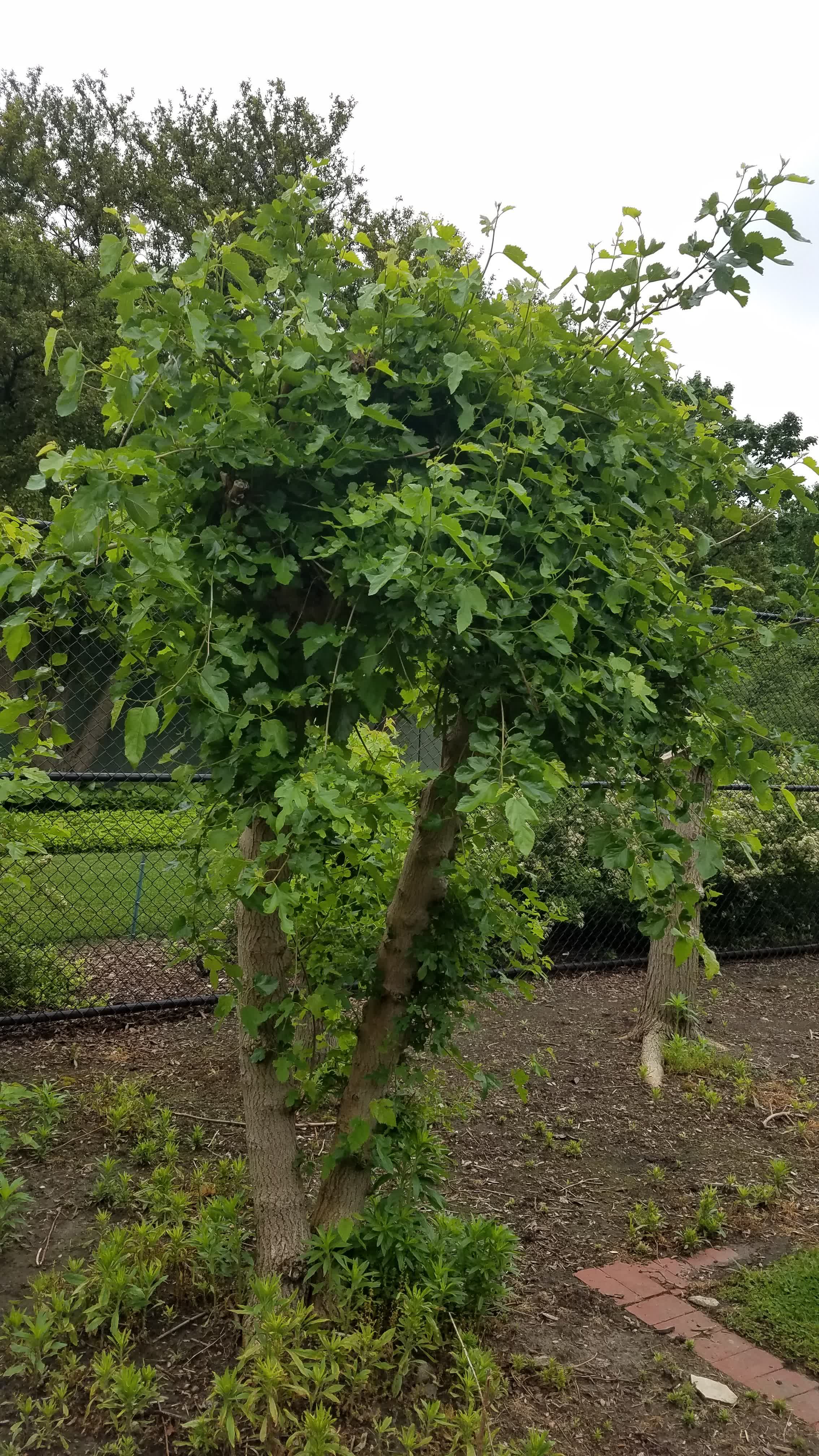
Plant
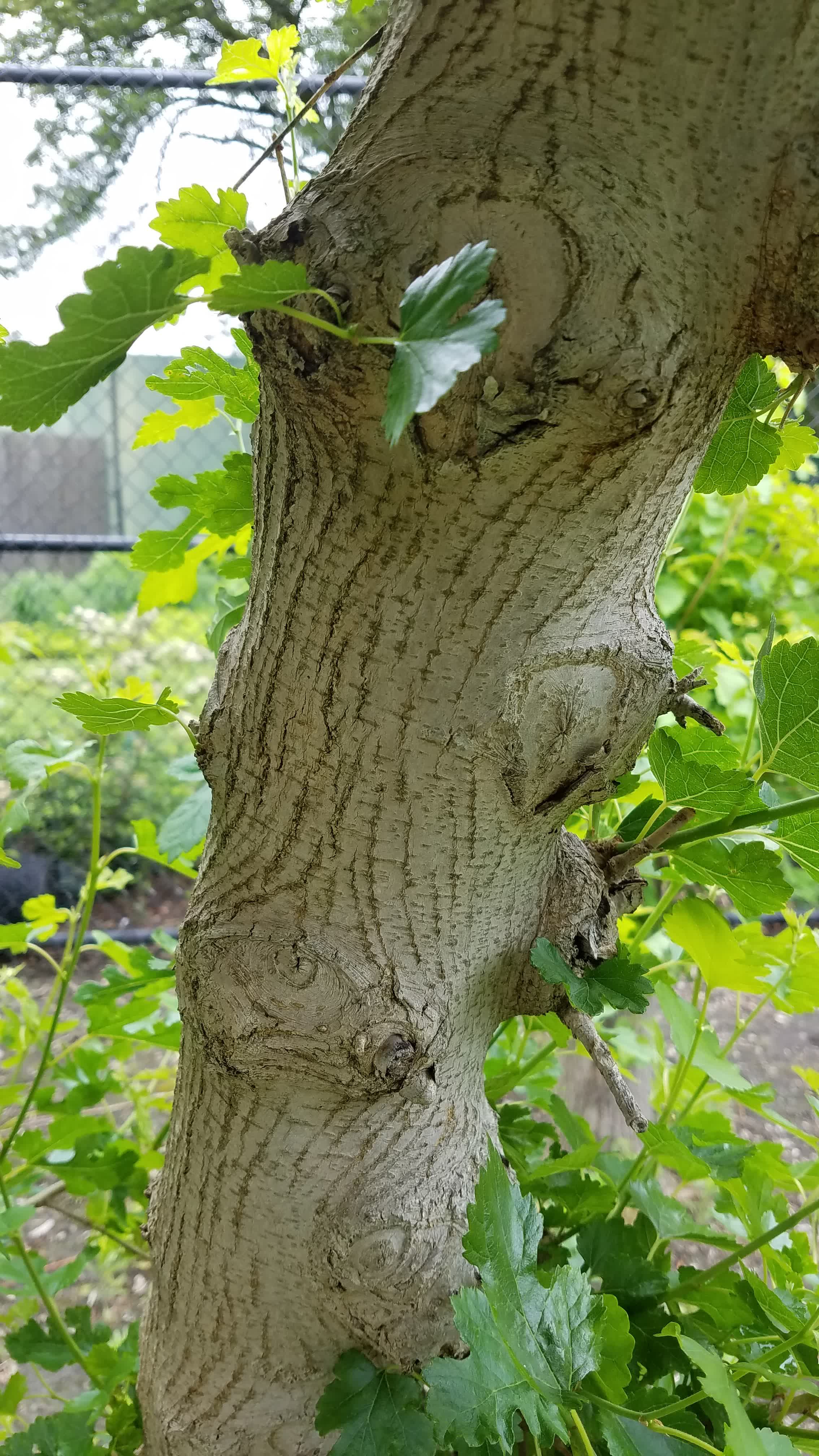
Bark
Raw Data
    {'BotanicalName': 'Morus ',
 'Comments': 'Morus, a genus of flowering plants in the family Moraceae, '
             'comprises 10–16 species of deciduous trees commonly known as '
             'mulberries, growing wild and under cultivation in many temperate '
             'world regions.[1]\r\n'
             '\r\n'
             'The closely related genus Broussonetia is also commonly known as '
             'mulberry, notably the paper mulberry, Broussonetia papyrifera. '
             'Mulberries are fast-growing when young, but soon become '
             'slow-growing and rarely exceed 10–15 metres (30–50 ft) tall. The '
             'leaves are alternately arranged, simple and often lobed and '
             'serrated on the margin. Lobes are more common on juvenile shoots '
             'than on mature trees.\r\n'
             '\r\n'
             'The trees can be monoecious or dioecious.[2][3] The mulberry '
             'fruit is a multiple fruit, approximately 2–3 cm (3/4–1 1/4 in) '
             'long. Immature fruits are white, green, or pale yellow. In most '
             'species the fruits turn pink and then red while ripening, then '
             'dark purple or black, and have a sweet flavor when fully ripe.',
 'CommonName': 'Mulberry',
 'DateAdded': '2017-06-26T13:30:24.457000',
 'Images': [{'ImageType': 'Plant', 'ImageURL': 'Images/txxzchzd.io4.JPG'},
            {'ImageType': 'Leaves', 'ImageURL': 'Images/o1qkmtc2.4jo.JPG'},
            {'ImageType': 'Plant', 'ImageURL': 'Images/4bowr23c.u50.jpg'},
            {'ImageType': 'Bark', 'ImageURL': 'Images/skw21r2y.z4n.jpg'}],
 'Locations': [{'LocationComments': 'check with Hort Dept',
                'LocationName': 'Amherst nursery, main parking lot'},
               {'LocationComments': None, 'LocationName': 'x'}],
 'PlantID': 143,
 'Toxicity': [{'Citation': 'Reference: 1, 2  ',
               'ToxicityAnimal': 'sheep; humans',
               'ToxicityComments': 'caution: Morus nigra, morus alba: possible '
                                   'digestive issues; genus Maclura (maclura '
                                   'pomifera) -leaves may have toxicological '
                                   'significance for sheep.'}]}